


Storm Damaged Tree Cleanup Starts With Safety

A tree can look fine from the ground and still be one gust away from falling. After heavy rain, high winds, or a Southern California winter storm, storm damaged tree cleanup is not just about clearing the mess. It is about protecting people, homes, vehicles, fences, power lines, and the healthy trees that are still standing.
The safest next step is often to pause before picking up a saw. Broken limbs can be under tension, leaning trunks can shift without warning, and wet soil can no longer hold a root system that seemed stable the day before. A careful plan helps prevent a bad situation from becoming an emergency.
Start by Securing the Area
Keep family members, pets, tenants, and neighbors away from the damaged tree. Create more distance than you think you need, especially if branches are hanging overhead, the trunk is split, or the tree is leaning toward a structure. Do not park beneath it or walk underneath it to inspect the damage.
If any branch, trunk, or downed tree is touching a power line, stay well away and contact the utility provider or emergency services. Do not attempt to move the branch with a pole, rope, ladder, or piece of equipment. Even a line that appears inactive can be dangerous.
A tree that has fallen across a driveway or access route may be frustrating, but the urgency depends on what it has affected. If it blocks a home entrance, creates an immediate hazard, or involves utilities, treat it as a priority. If it is simply down in an open part of the yard, it may be safer to leave it undisturbed until a qualified crew can assess it.
Look for Damage That Is Easy to Miss
Some storm damage is obvious: a large limb on the roof, a snapped trunk, or a tree lying across the yard. Other problems develop quietly. A tree may have cracked where two trunks join, lost roots below ground, or shifted just enough to make it unstable.
From a safe distance, look for fresh leaning, lifted soil around the base, exposed roots, deep cracks in the trunk, split branch unions, and limbs that are caught in the canopy. Also check for new damage to gutters, roof edges, fences, irrigation lines, and parked vehicles. Take clear photos before anything is moved. They can help with insurance discussions, property records, and a professional estimate.
Do not assume a broken branch is harmless because it is small. A branch hung up high in another tree can drop days later as the wood dries, wind returns, or the supporting limb gives way. These are often called hangers, and removing them safely usually requires the right climbing, rigging, or aerial equipment.
Wet Ground Changes the Risk
Storms can saturate the ground, particularly around mature trees and trees planted on slopes. When soil is loose and roots are compromised, a tree can uproot with little warning. This is a real concern across hillside properties, open lots, and areas where drainage has been poor.
Watch for soil that is mounded or cracked on the side opposite the lean. That can indicate roots are lifting out of the ground. If you see it, keep clear of the area and arrange for a professional inspection rather than trying to straighten, stake, or prune the tree yourself.
What Homeowners Can Handle Safely
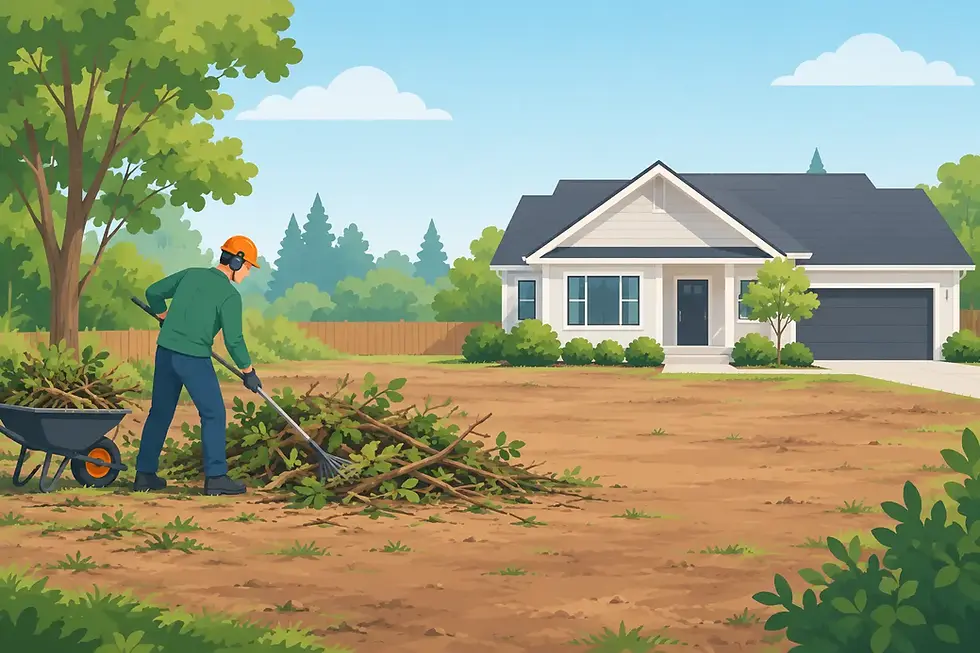
Small, fully detached branches that are already on the ground can often be gathered if they are away from power lines, roofs, unstable trees, and traffic areas. Wear gloves, sturdy closed-toe shoes, and eye protection. Move carefully over wet ground, and avoid carrying more than you can control.
It is also reasonable to clear light debris from walkways and drains once the area is safe. Keeping drains open can reduce standing water and prevent additional landscape damage. Stack manageable debris where it will not block access, create a fire concern, or interfere with emergency vehicles.
That said, cleanup is not always a do-it-yourself project simply because the tree is in your yard. Chainsaws, ladders, and storm-damaged wood are a risky combination. Wood under pressure can snap, roll, or spring back unexpectedly when cut. A limb that looks like it is resting on the ground may be supporting much more weight than it appears to be.
When Storm Damaged Tree Cleanup Needs a Professional
Call an insured tree service when there is a large downed tree, a trunk split, a significant lean, a limb over a roof, or any involvement with utility lines. Professional help is also the right choice when a tree is tangled with another tree, when branches require climbing or bucket access, or when the site has steep slopes and limited access.
A qualified crew can determine whether a damaged tree can be saved with careful pruning or whether removal is the safer option. This decision depends on the tree species, the amount of crown loss, the location of the break, the condition of the trunk and roots, and what the tree could strike if it fails. Saving a tree is worthwhile when it can recover safely. Keeping a severely compromised tree near a house, driveway, or neighbor's property is usually not worth the risk.
For homeowners and property managers, insurance matters as much as equipment. Ask whether the contractor is licensed, bonded, and insured, and confirm that the estimate explains the scope of work. You should know whether the crew will remove wood, haul away brush, grind a stump if needed, and leave the work area clean.
At Erik's Tree Service & Brush Clearance, Corp., the goal is to give Southern California property owners a clear recommendation based on safety, property needs, and budget. A good tree crew should explain what needs immediate attention, what can wait, and why.
Avoid These Common Cleanup Mistakes
The biggest mistake after a storm is rushing to make the yard look normal. Appearance matters, but safety comes first. Avoid climbing a ladder to cut overhead limbs, even if the branch seems reachable. A ladder can shift on soft ground, and the branch may move once it is cut.
Do not pull a fallen tree with a truck or use a rope to tug on a leaning trunk. The force can cause the tree to twist, release suddenly, or damage underground utilities, fences, and hardscape. It can also put people directly in the path of the tree.
Avoid topping a damaged tree by cutting back large sections without a plan. Improper cuts can create more wounds, encourage weak regrowth, and leave the tree less stable in future winds. Selective pruning by a trained crew is a much better approach when the tree is structurally sound enough to keep.
Finally, do not burn storm debris in the yard. Brush piles can create a fire hazard, and local restrictions may apply. Proper hauling and disposal keeps the property safer and prevents piles from becoming a long-term problem.
Plan for Cleanup, Then Plan for the Next Storm
Once immediate hazards are addressed, take a look at what made the damage worse. Overextended limbs, dense canopies, deadwood, weak branch unions, and brush growing too close to structures can all increase storm and fire risk. Routine trimming does not guarantee that a tree will never fail, but it can reduce preventable hazards and help trees handle wind more evenly.
For properties in Santa Clarita Valley, Antelope Valley, Simi Valley, San Fernando Valley, and throughout Los Angeles County, brush clearance can be part of the solution as well. Clearing overgrowth improves access around trees, makes future inspections easier, and supports defensible-space planning where fire risk is a concern.
Keep photos, estimates, receipts, and notes about the storm damage in one place. If you manage rental property or a larger parcel, record the date of the inspection and any work completed. This simple documentation can be useful if a future issue arises or if you need to show that a known hazard was addressed.
A storm leaves enough uncertainty on a property without adding avoidable risk. Give damaged trees room, get a clear assessment when the work is beyond ground-level debris, and choose a crew that treats your property with the same care it deserves.


Comments