


How to Identify Dangerous Branches at Home

A branch can look solid from the ground and still fail without much warning. That is why knowing how to identify dangerous branches matters for homeowners, landlords, and property managers. A falling limb can damage a roof, block a driveway, injure someone, or create a serious fire and access concern on a Southern California property.
You do not need to be a tree expert to notice the first signs of trouble. A careful visual check after wind, rain, extreme heat, or a long dry period can help you spot risks early. The key is knowing what to look for and when to leave the work to an insured tree service professional.
How to Identify Dangerous Branches Before They Fall
Start by looking at where the branch is located. A branch over a home, parked vehicle, patio, play area, fence, sidewalk, or power line deserves more attention than one over an open part of the yard. Location does not make a branch weak, but it does raise the consequences if it breaks.
Then look at the branch itself, from the trunk connection all the way to the tips. Healthy limbs generally have intact bark, a solid attachment point, and foliage that fits the rest of the tree. Dangerous branches often show one or more visible changes: dead wood, splitting, decay, damage, or unusual movement.
A concern does not always mean the whole tree needs to come down. In many cases, targeted pruning can remove the hazardous limb while preserving the health and shade of the tree. The right solution depends on the tree species, its condition, the branch size, and what sits below it.
Dead or Dying Limbs
Dead branches are among the most common hazards on residential properties. They may have no leaves when nearby branches are full, or they may hold dry, brittle leaves long after the rest of the tree has changed with the season. Bark that is peeling away, missing entirely, or falling in large pieces can also be a warning sign.
From the ground, dead wood often looks gray, bare, and lifeless compared with healthy branches. Smaller dead twigs can be normal in some trees, especially after heat stress. Large dead limbs, however, should not be ignored. They become more brittle over time and are more likely to break during wind or under their own weight.
Do not try to test a high branch by pulling on it, throwing something at it, or climbing the tree. A branch that is already failing can come down suddenly.
Cracks, Splits, and Weak Attachments
A crack where a branch joins the trunk is a serious concern, especially on a large limb. Look for a visible split, a dark line running through the connection, fresh exposed wood, or bark that appears pinched between two stems. These signs can indicate that the branch is separating from the tree.
Branches with a narrow, V-shaped connection may be weaker than those with a broader attachment angle. When two major stems grow tightly together, bark can become trapped between them instead of forming a strong union. This is often called included bark, and it can make a limb more likely to split during high winds or when the canopy is heavy.
A recent crack is especially urgent if it appears after a storm, heavy pruning, vehicle impact, or a branch failure nearby. Keep people and pets away from the area until a professional can inspect it.
Decay, Cavities, and Fungal Growth
Decay can weaken wood from the inside while the outside still looks fairly normal. Watch for holes, deep cavities, soft or crumbly wood, mushrooms at the base of the tree or along a branch, and areas that look swollen or sunken. These conditions do not always mean immediate failure, but they should be evaluated when they affect a large limb or a branch over a target area.
Termite activity, wood-boring insects, and old pruning cuts can also contribute to decay. A tree may grow around a wound and remain stable for years, or decay may progress farther than it appears from the ground. That is why a visual inspection has limits. A trained professional can assess the branch structure, the amount of sound wood remaining, and whether pruning is enough.
Hanging, Bent, or Storm-Damaged Branches
After strong Santa Ana winds or a heavy rain event, walk around your property and look up carefully. A branch caught in the canopy, hanging by a strip of bark, or resting on another limb can fall later, even after the weather has cleared.
Bent branches should also be checked. A flexible young branch may recover, but a large mature limb that has suddenly sagged may have internal cracking or a damaged attachment point. If a branch has shifted closer to a roof, power line, or driveway, treat it as a priority.
Keep a safe distance from anything near electrical lines. Never cut, move, or pull a branch that is touching a utility line. Contact the utility company for an immediate electrical hazard, then arrange qualified tree service for the vegetation work once the area is safe.
Branches That Extend Too Far From the Tree
Long, heavy horizontal limbs can become risky when they extend well beyond the main canopy without enough support. This is common on older trees that have not been pruned for several years. The farther a branch reaches, the more leverage it puts on its attachment point.
Look for limbs with heavy growth concentrated at the outer ends, especially if the branch is over a structure or frequently used space. This does not mean cutting it back aggressively. Improper topping can create weak regrowth, stress the tree, and leave it looking unnatural. A professional can reduce weight selectively while maintaining a safer, healthier structure.
Root Problems Can Make Branch Hazards Worse
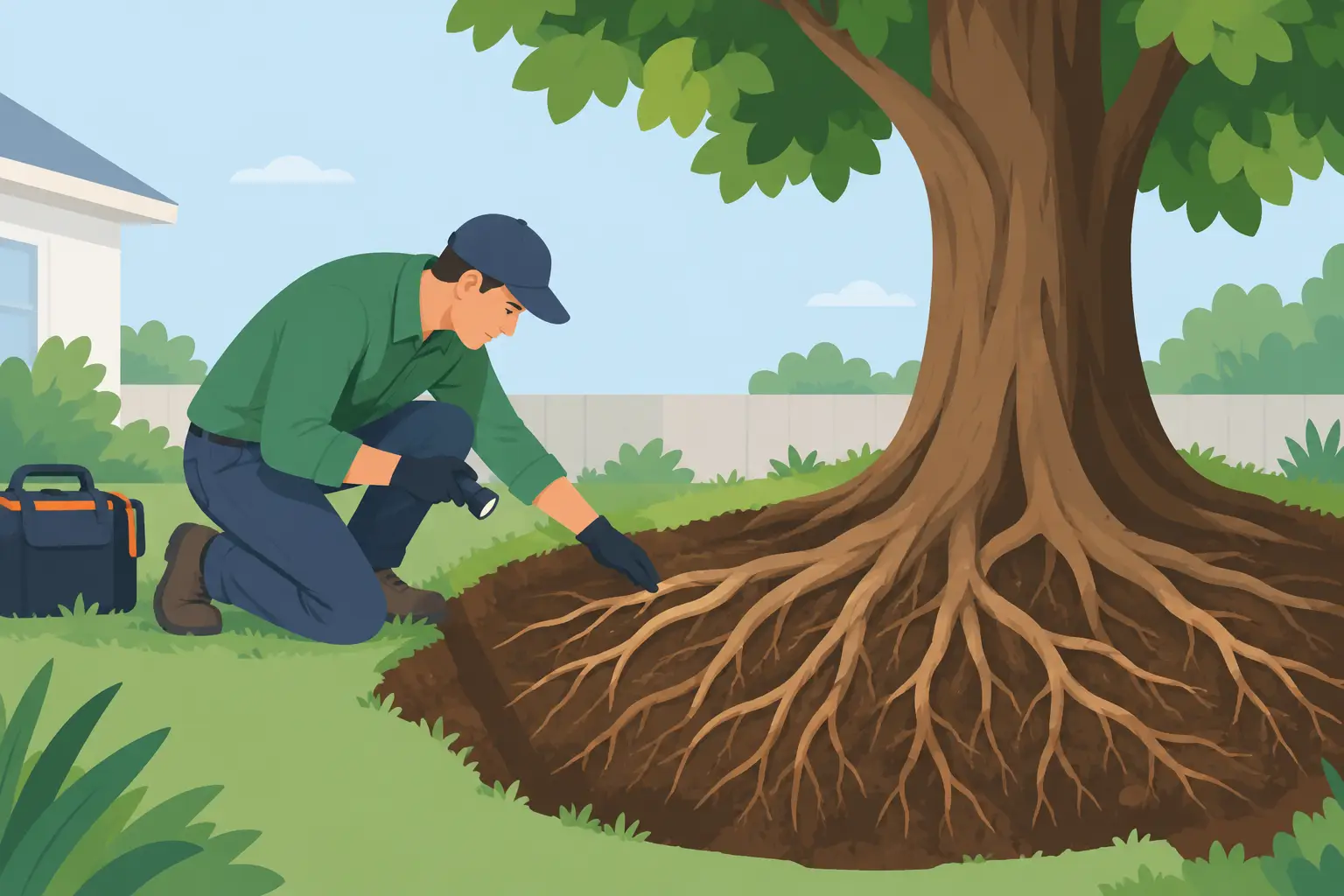
Sometimes the concern is not just the branch. If the entire tree is leaning, the soil around its base is cracking or lifting, or exposed roots are damaged, every major limb deserves closer attention. A tree with root problems may become unstable as a whole.
New leaning after a storm, construction damage near the root zone, or soil movement on a slope are reasons to request an inspection promptly. Avoid parking, gathering, or storing equipment beneath a tree that appears to be shifting.
When to Call a Professional Right Away
Some branch problems are not safe for a homeowner to handle, even with a ladder and a chainsaw. Call for professional help promptly when a branch is large, high off the ground, cracked at the trunk, hanging over a structure, tangled in other limbs, or close to a power line.
You should also call if you see extensive decay, repeated branch failures, or a tree that suddenly leans. These conditions require more than a quick trim. A qualified, insured tree service can determine whether careful pruning, cabling in limited situations, clearance work, or removal is the safest choice.
For Southern California properties, regular maintenance also supports defensible space and easier access around homes, fences, and outbuildings. Removing dead wood and unmanaged overgrowth before wind and fire season is often less stressful and more affordable than dealing with emergency damage later.
A Safer Way to Check Your Trees
Inspect trees from the ground a few times each year and after major weather events. Use binoculars if needed, but do not climb, use a ladder near branches, or work under a limb you believe may fail. Take clear photos from a safe distance so you can track changes or show them to a professional.
Erik's Tree Service & Brush Clearance provides practical evaluations and free estimates for property owners who need help with hazardous limbs, overgrown trees, and brush concerns. The goal is not to remove healthy trees unnecessarily. It is to address the branches that put people, homes, and access areas at risk.
A small crack, dead limb, or hanging branch is much easier to handle before the next wind event turns it into property damage. If something above your yard does not look right, trust that instinct, keep the area clear, and have it checked before it becomes an emergency.


Comments