


Homeowner Tree Maintenance Guide for Safer Yards

A healthy-looking tree can still create a serious problem when a heavy limb hangs over a roof, branches crowd a power line, or dry brush builds up beneath the canopy. This homeowner tree maintenance guide focuses on the practical checks that help Southern California property owners protect their homes, improve curb appeal, and reduce avoidable fire and safety risks.
Tree care is not about cutting everything back as far as possible. Good maintenance means noticing changes early, making careful decisions about pruning and clearance, and bringing in insured professionals when the work involves height, weight, utilities, or uncertain tree health.
Start With a Safety Walk Around Your Property
Walk your yard every few months and after strong wind or heavy rain. Look up before looking down. Dead limbs, broken branch stubs, hanging palm fronds, and branches rubbing against the roof are easier to address before they fall.
Pay special attention to trees near driveways, sidewalks, fences, patios, and play areas. A limb that would be a minor issue in an open part of the yard can become a liability when it hangs over a place people use every day. If a tree is leaning more than usual, has visible root lifting, shows deep cracks in the trunk, or has large dead sections in its canopy, treat it as a priority rather than waiting for routine trimming.
Also check the ground around the tree. Mushrooms growing at the base, soft or hollow areas in the trunk, and soil heaving can point to root or decay issues. These signs do not always mean a tree must be removed, but they do call for a professional assessment.
Know What You Can Handle and What You Should Not
Homeowners can usually manage light tasks from the ground, such as picking up fallen twigs, removing small loose debris, watering young trees during dry periods, and keeping mulch away from the trunk. These simple habits support a cleaner yard and make it easier to spot new problems.
Pruning becomes a different kind of job when a branch is large, high off the ground, close to a structure, or under tension. Cutting the wrong limb can leave a tree unbalanced, create an open wound that invites pests, or cause a heavy section to fall unexpectedly. Ladder work and chainsaw work are especially risky together.
Never attempt to prune branches near electrical lines. Even a branch that does not appear to touch a line can shift while being cut. Utility-related tree work should be handled through the proper channels and by qualified professionals.
Prune for Health, Clearance, and Structure
Most residential trees benefit from selective pruning, not aggressive topping. Topping removes major branches or cuts the canopy back to stubs. It can stress the tree, encourage weak new growth, and leave a property with the same hazard returning in a less stable form.
A better approach removes dead, damaged, crossing, or poorly placed branches while preserving the tree's natural shape. The goal may be to create roof clearance, improve visibility around a driveway, keep branches off a fence, or reduce the weight of an overextended limb. The right amount of pruning depends on the tree species, its age, its condition, and the time of year.
For example, a fast-growing mulberry or ficus may need regular management to keep it from overtaking a small yard. A mature oak often requires a more conservative approach. Palm trees have their own maintenance needs, and removing too many green fronds can weaken them. There is no one cutting schedule that works for every tree.
Keep Branches Away From Your Home
Branches that constantly scrape a roof can wear down roofing materials and create a pathway for pests. Dense growth against walls or windows can trap moisture and make exterior maintenance harder. As a general property-care practice, maintain reasonable clearance between trees and structures before contact becomes a problem.
Do not wait until branches are resting on the roof. Small limbs can become much heavier after rain, and wind can turn a rubbing branch into a broken one. Schedule pruning before the canopy reaches siding, gutters, solar equipment, or chimney areas.
If you rent out a property, regular tree checks are also part of responsible upkeep. Clear access paths, visible lighting, and unobstructed walkways make the property safer for tenants and visitors while reducing complaints about overgrowth.
Manage Brush Before It Becomes a Fire Concern
In Santa Clarita Valley, Antelope Valley, Simi Valley, San Fernando Valley, and surrounding Los Angeles County communities, brush management is a practical part of property maintenance. Dry grass, dead palm fronds, fallen limbs, and dense vegetation can allow fire to move more easily across a yard.
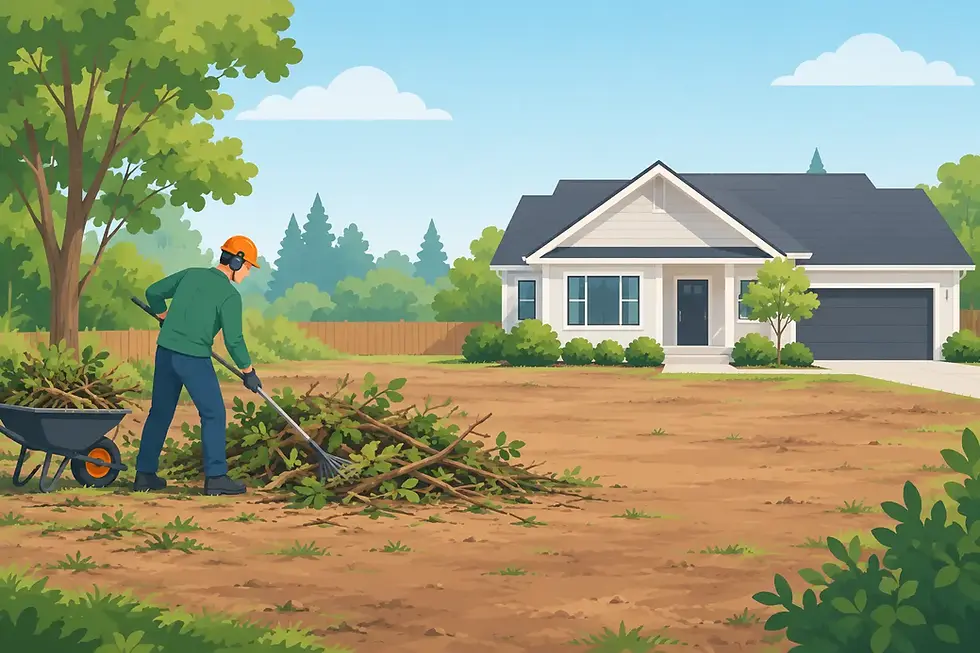
Keep the area beneath trees clear of accumulated debris, especially during dry and windy periods. Remove dead material from fence lines, slopes, side yards, and around outbuildings. When vegetation is thick or access is difficult, brush clearance is often safer and more efficient with the right equipment and crew.
Defensible-space expectations can vary by location, property type, and local fire requirements. A hillside lot near open space may need a different maintenance plan than a compact neighborhood yard. If you are unsure what applies to your property, ask before making major cuts. Clearing vegetation without a plan can cause erosion, damage desirable plants, or create unnecessary expense.
Water and Mulch With Restraint
Southern California trees often struggle because of inconsistent watering, compacted soil, or water applied too close to the trunk. Young trees usually need more regular support while roots establish. Mature trees generally benefit from deeper, less frequent watering that reaches the root zone instead of quick daily surface watering.
Watch for signs that watering needs adjustment, including wilting, yellowing leaves, early leaf drop, or unusually dry soil beneath the canopy. Those symptoms can also come from pests, disease, root damage, or heat stress, so do not assume more water is always the answer.
Mulch can help hold moisture and moderate soil temperature. Spread it around the root area, but keep it several inches away from the trunk. Mulch piled against bark holds moisture where it does not belong and can contribute to decay or pest activity.
Watch for Changes After Wind, Heat, and Storms
Weather exposes weak points that may not be obvious during a normal week. After a wind event, inspect trees for fresh cracks, hanging limbs, split unions where major branches meet, and new leaning. Heat waves can reveal watering problems, while rain can add weight to already stressed limbs.
Take photos when you notice a change. A picture can help you compare whether a lean, crack, or canopy dieback is getting worse over time. It is also useful when explaining the issue during an estimate.
If a branch has fallen, keep people and pets away from the area until you understand what remains overhead. A fallen limb may have been held in place by another damaged branch, and the second failure can be more dangerous than the first.
Plan Maintenance Instead of Waiting for an Emergency
The most cost-conscious approach is usually planned maintenance. Addressing a dead branch, overcrowded canopy, or growing brush problem early is often simpler than responding after a limb damages a fence or blocks a driveway. A regular inspection also helps homeowners budget for work that may need to be phased over time.
When requesting an estimate, explain your goals clearly. You may want better roof clearance, reduced fire risk, improved access, cleanup after a storm, or removal of a declining tree. Ask what work is recommended now, what can reasonably wait, and how debris will be handled. A reliable tree service should explain the scope in plain language and respect your budget.
For work involving large trees, difficult access, substantial brush, or potential hazards, choose a licensed, bonded, and insured local contractor. Erik's Tree Service & Brush Clearance provides practical tree and brush solutions for homeowners who want the job completed safely, cleanly, and with clear expectations from the start.
A Homeowner Tree Maintenance Guide for Better Decisions
The best time to deal with a tree concern is when it is still manageable. A branch that looks slightly weak today, brush that seems only a little overgrown, or a canopy starting to reach the roof can quickly become a larger project after the next wind event.
Set a reminder to walk your property at the change of seasons, then act on what you see. A few minutes of attention can help you protect the trees worth keeping and get professional help before a small concern turns into an urgent one.


Comments