


Emergency Fallen Tree Help for Homeowners
- erikstreeandbrush
- Jun 28
- 6 min read

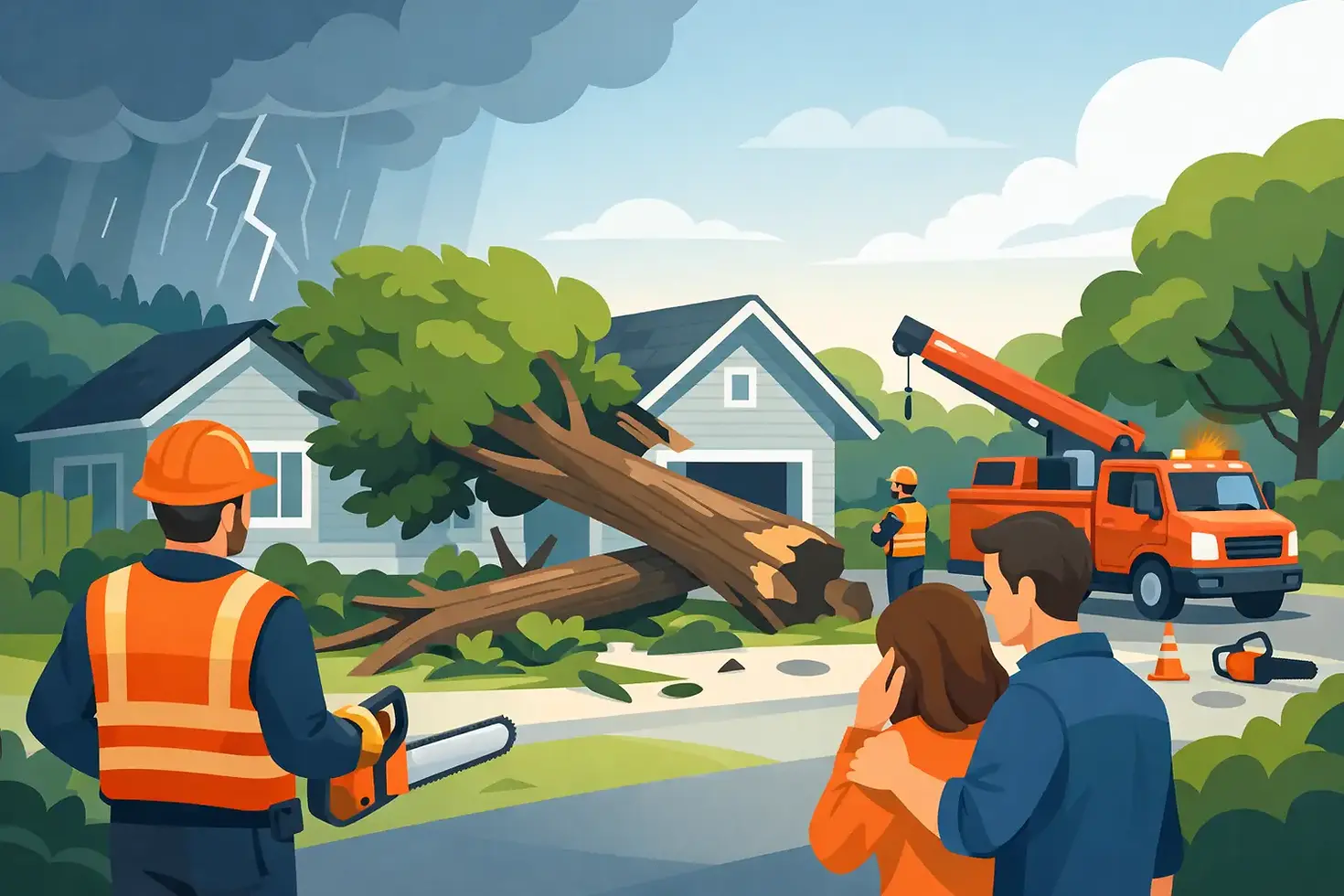
A tree comes down fast. One hard wind event, saturated soil, or a cracked limb can turn a quiet yard into a blocked driveway, damaged fence, or dangerous roof impact in minutes. When you need emergency fallen tree help, the first priority is not cleanup - it is keeping people safe and preventing the situation from getting worse.
In Southern California, fallen tree emergencies are not always caused by dramatic storms. Long dry periods, weak root systems, neglected trimming, hillside movement, and high winds can all bring a tree down without much warning. That is why homeowners and property owners need a simple plan. The right response in the first hour can protect your family, your property, and your insurance claim.
What to Do First When You Need Emergency Fallen Tree Help
Start by staying clear of the tree and the area around it. A fallen tree may look stable, but heavy limbs can still shift, split, or roll. If the tree is touching a house, garage, vehicle, fence line, or power source, treat it as an active hazard.
If anyone is injured or if a power line is involved, call emergency services and the utility company right away. Do not approach downed wires, even if they look inactive. It is not worth guessing.
If the area is safe enough to observe from a distance, take a quick look at what the tree has affected. Has it blocked access to your home? Is it resting on a roof? Did it tear up the root ball and leave a hole in the ground? These details matter because emergency tree removal is not always a simple cut-and-haul job. Sometimes the real risk is structural damage, unstable limbs under tension, or debris that could fall during removal.
Photos can help at this stage. Take clear pictures of the tree, the damage, and the surrounding area from a safe location. That gives you a record for insurance and helps a tree service understand the urgency before arriving on site.
What Not to Do
A lot of property damage gets worse because someone tries to solve it too quickly. If a large tree or limb has fallen, this is not the time to grab a household chainsaw and start cutting. Fallen trees often hold stored pressure in the trunk and branches. One wrong cut can cause a section to snap back, roll, or drop unexpectedly.
It is also a mistake to move debris before documenting the damage, unless leaving it in place creates a more immediate safety issue. Insurance companies usually want to see the original condition. The same goes for temporary repairs. Covering a roof opening with a tarp may make sense if water is getting in, but major changes should wait until the damage has been recorded.
Another common mistake is assuming the entire tree has failed. Sometimes only part of the canopy has fallen, while the remaining trunk is cracked and still standing. That can be even more dangerous than a tree already on the ground.
When to Call a Professional Right Away
Some jobs can wait a day or two. Emergency tree work usually cannot. If the tree has landed on a structure, blocked a road or driveway, damaged fencing that secures pets or children, or created a risk near utilities, it is time to call an insured professional.
This is especially true for large trees, leaning trunks, split limbs hanging overhead, or root failure near retaining walls and slopes. These conditions require controlled removal, proper equipment, and a crew that knows how to work safely around homes and tight residential spaces.
For local homeowners, emergency fallen tree help should come from a company that is licensed, bonded, and insured. That is not just a nice extra. It protects you when the work is urgent, complicated, and happening close to valuable property. You also want a company that can explain the plan clearly, provide a fair estimate, and clean up the site instead of leaving a second mess behind.
How Emergency Tree Service Usually Works
Once a crew arrives, the first step is assessing the hazard. They will look at where the tree is resting, what is under pressure, whether additional limbs could fail, and how to remove the tree without causing more damage. In some cases, the safest method is to dismantle the tree in sections. In others, the crew may need to stabilize part of the tree before any cutting begins.
After the hazard is controlled, the focus shifts to clearing access and removing debris. If a driveway is blocked, reopening it may be the immediate goal. If a roof or fence was damaged, the crew may prioritize removing weight from the structure so repairs can begin.
Cleanup matters more than many people expect. Emergency work should not leave dangerous stumps, jagged limbs, or scattered debris across the property. A professional job includes making the site safer, cleaner, and easier to manage after the emergency is over.
Emergency Fallen Tree Help and Insurance
Insurance questions come up quickly after a tree falls. Every policy is different, so exact coverage depends on your provider and the cause of the damage. In many cases, if a tree falls due to a covered event and damages an insured structure, part of the removal may be included. If the tree falls in the yard without damaging a covered structure, coverage may be more limited.
This is where documentation and clear communication matter. Take photos, keep notes, and ask for written estimates. If your insurer asks for details, it helps to have a straightforward explanation of what happened and what emergency work was required to make the property safe.
Homeowners sometimes hesitate to call right away because they are worried about cost. That is understandable. But delay can make things more expensive if water intrusion, added structural strain, or secondary hazards develop. A good local company will explain what needs immediate attention and what can wait, so you can make a practical decision based on safety and budget.
Why Trees Fall in Southern California Yards
Many people assume only old or dead trees fall. That is not always the case. Healthy-looking trees can fail if roots have been weakened by drought stress, shallow watering, compacted soil, hillside erosion, or prior construction around the base. Wind can expose problems that were already there.
Poor pruning is another factor. Heavy end-weight on long limbs, multiple trunks with weak attachments, and unbalanced growth can all increase the chance of breakage. That does not mean every large tree is dangerous, but it does mean regular maintenance has real value.
Palm trees, pines, eucalyptus, and broad-canopy shade trees each behave differently in high wind and dry conditions. What matters most is not the species alone, but its condition, structure, and location near homes, driveways, and neighboring properties.
Preventing the Next Tree Emergency
No tree service can promise that a healthy tree will never fail. Nature does what it does. Still, many emergencies can be reduced with routine trimming, hazard checks, deadwood removal, and attention to trees that have started leaning or dropping large limbs.
If you have mature trees close to your house, detached garage, fence line, or access road, it is smart to have them looked at before the next wind event. The goal is not overcutting. In fact, aggressive trimming can create new problems. The better approach is balanced pruning and practical maintenance based on the tree, the property, and the level of risk.
Brush clearance also plays a role, especially in fire-prone areas. A property with overgrowth, neglected trees, and limited access can become harder to manage in any emergency. Keeping trees and vegetation maintained makes the whole property safer and easier to service when urgent issues happen.
For homeowners in Santa Clarita Valley, Antelope Valley, Simi Valley, San Fernando Valley, and surrounding Los Angeles County communities, working with a local company matters. A crew familiar with the area understands the common tree issues, the wind patterns, the hillside conditions, and the urgency that comes with residential storm and hazard cleanup. That local experience is part of what makes Erik's Tree Service & Brush Clearance, Corp. a dependable choice when property owners need prompt, professional help.
If a tree has fallen on your property, slow down for a moment, keep your distance, and focus on safety first. The cleanup can start once the risk is understood and the right help is on the way.


Comments