


How Do Tree Services Charge Homeowners?

If you have ever looked at a tree leaning over a roofline or a yard full of overgrown brush and wondered, how do tree services charge, you are not alone. Most homeowners do not hire tree crews often, so the pricing can feel hard to predict at first. The good news is that reputable companies are usually pricing the same core things: labor, equipment, risk, access, debris removal, and the time it takes to do the job safely.
That is why two trees that look similar from the street can come with very different estimates. A small tree in an open front yard is one kind of job. A large tree hanging over a garage, fence, or power line is another. The price is not just about the tree itself. It is about what it takes to remove, trim, clear, and clean up without damaging the property.
How do tree services charge for a job?
In most cases, tree services charge by the project, not by a simple flat menu price. A crew typically needs to see the property before giving an accurate number because so many details affect the work. That is why free estimates matter. They let the company look at the tree, the surrounding space, the condition of the site, and the safest way to complete the job.
Some companies may mention hourly pricing for certain cleanup or smaller tasks, but larger tree work is usually quote-based. This protects both the homeowner and the contractor. You get a clearer expectation of the total cost, and the crew can account for the actual difficulty of the work instead of guessing from photos alone.
For property owners, that means the right question is usually not, “What do you charge per tree?” It is, “What is included in this estimate, and why?” A good company should be able to explain that in plain language.
The biggest factors that affect tree service pricing
Tree work is one of those services where the details matter more than people expect. A basic trim, a hazardous removal, and a brush clearance job may all involve cutting vegetation, but they are priced very differently because the labor and risk are different.
Tree size and condition
Larger trees usually cost more because they take more time, more cutting, more rigging, and more cleanup. Height matters, but trunk diameter, canopy spread, and overall weight matter too. A tree that is dead, decaying, cracked, or storm-damaged may also cost more because it can be less predictable to work on safely.
Healthy trees can still be difficult, but damaged trees often require extra caution. When a crew has to remove pieces slowly and carefully to avoid a sudden break, the job becomes more specialized.
Access to the work area
Easy access can make a major difference in price. If a crew can back equipment into the yard, work moves faster. If they have to carry everything by hand through a narrow side gate, uphill slope, or tight backyard, labor goes up.
This is common on residential properties across Southern California where homes, fences, retaining walls, and landscaping can limit access. The more difficult it is to bring in tools, chip debris, or haul wood out, the more time the job usually takes.
Risk around structures and utilities
A tree standing alone in an open lot is one thing. A tree over a home, patio cover, parked vehicles, pool equipment, or utility lines is another. The closer the limbs are to something valuable or dangerous, the more careful the crew has to be.
That often means sectional removal instead of faster open dropping. It may involve climbing, rigging ropes, and lowering limbs piece by piece. That extra care is exactly what protects your property, but it is also part of what you are paying for.
Type of service being performed
Not all tree jobs are priced the same way. Trimming, pruning, removals, stump work, brush clearance, and hauling all have different labor demands. A light shape-up on a smaller tree is generally less involved than heavy crown reduction, large limb removal, or full takedown.
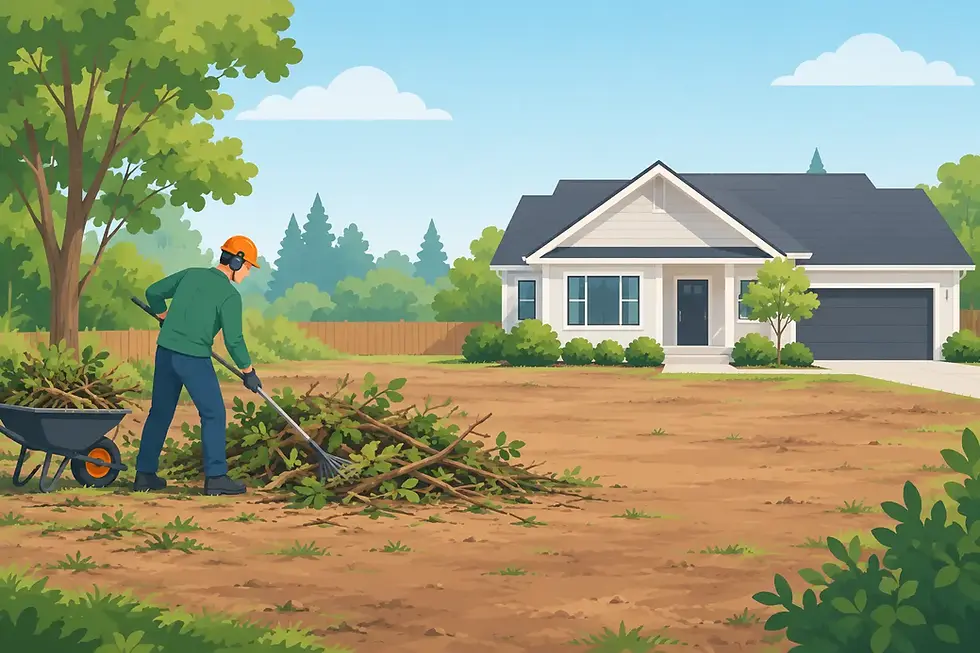
Brush clearance is similar. A property with light overgrowth is different from a lot with dense, dry, fire-prone vegetation that needs to be cut back and hauled away. In fire-risk areas, defensible-space work may also require a more thorough scope, which can change the estimate.
Cleanup and debris hauling
One reason homeowners see price differences between quotes is cleanup. Some estimates include full debris removal, chipping, hauling, and site cleanup. Others may price the cutting only, or may leave wood on site if the customer prefers that option.
This is worth asking about directly. A lower quote is not always a better value if it leaves you with a large pile of limbs, logs, or brush to deal with after the crew leaves. Clear expectations matter.
Why one company may quote higher than another
If you get multiple estimates, do not assume the lowest one covers the same work. A higher quote may reflect better insurance coverage, more experienced labor, proper equipment, cleaner hauling, or a more complete scope of work.
Licensed, bonded, and insured tree services carry real overhead, but that protects the customer. When a crew is working high off the ground with chainsaws, ropes, chippers, and heavy debris, qualifications are not just a selling point. They are part of doing the job responsibly.
A lower quote can also mean the company is not including everything. Maybe stump grinding is separate. Maybe debris hauling costs extra. Maybe the crew plans a lighter trim than you expect. This is why apples-to-apples comparison matters more than the number alone.
How do tree services charge for trimming vs removal?
Tree trimming is usually less expensive than full removal, but the gap depends on the size of the tree and the complexity of the work. A straightforward trim removes selected limbs, improves shape, clears structures, or reduces overgrowth while keeping the tree in place. Removal takes the whole tree down, cuts it into manageable sections, and usually creates more hauling and cleanup.
That said, trimming is not always cheap. A large tree that needs careful thinning or clearance away from a roof may require skilled climbing and rigging. In those cases, trimming can still be a significant job.
Removal tends to cost more because everything has to come down safely, and the work often includes heavier wood handling. If a stump is included, that can affect the total too. Some estimates include stump grinding, and some treat it as a separate service.
What to ask when comparing estimates
The best estimate is not just a price. It is a clear explanation of the work. Homeowners should know whether the quote includes trimming or full removal, debris hauling, cleanup, stump work, and any special equipment needed for the property.
It also helps to ask how the crew plans to access the area and whether there are any conditions that could change the price. Most reputable companies will explain if hidden issues, such as severe internal rot or access limits, could affect the final scope.
You should also ask about insurance and whether the company is licensed and bonded. That is especially important when work is being done near homes, fences, driveways, and neighboring properties. Peace of mind has value.
Why free estimates are so important
Because tree service pricing depends so much on site conditions, free estimates are often the fairest way to price the work. They give the homeowner a chance to walk the property with a professional, point out concerns, and understand what is actually needed.
This also helps avoid overpaying for unnecessary work. Sometimes a tree that looks like it needs removal can be safely trimmed instead. Other times, what seems like a small issue is more hazardous than it appears. An in-person estimate brings clarity.
For local property owners, working with a company that understands Southern California conditions also helps. Brush growth, drought stress, wind exposure, tight residential lots, and fire-safety concerns all affect the way jobs are scoped and priced. A local crew sees those factors every day.
At Erik's Tree Service & Brush Clearance, Corp., that practical approach matters. Customers want clear recommendations, fair pricing, and work done safely by an insured team that respects the property.
The bottom line on tree service costs
So, how do tree services charge? Usually by the full scope of the job, based on labor, equipment, access, risk, cleanup, and the amount of material being removed. That is why there is rarely a one-size-fits-all price, and why an on-site estimate is the most accurate way to understand cost.
If you are comparing quotes, look past the top-line number and pay attention to what is included, how the work will be done, and whether the company is properly qualified. The right tree service should leave you feeling informed, not pressured, and confident that the job will be handled safely from start to finish.
When a tree or brush problem is affecting your safety, curb appeal, or peace of mind, a clear estimate is the first step toward getting the property back under control.


Comments