


Do Insured Tree Companies Cost More to Hire?

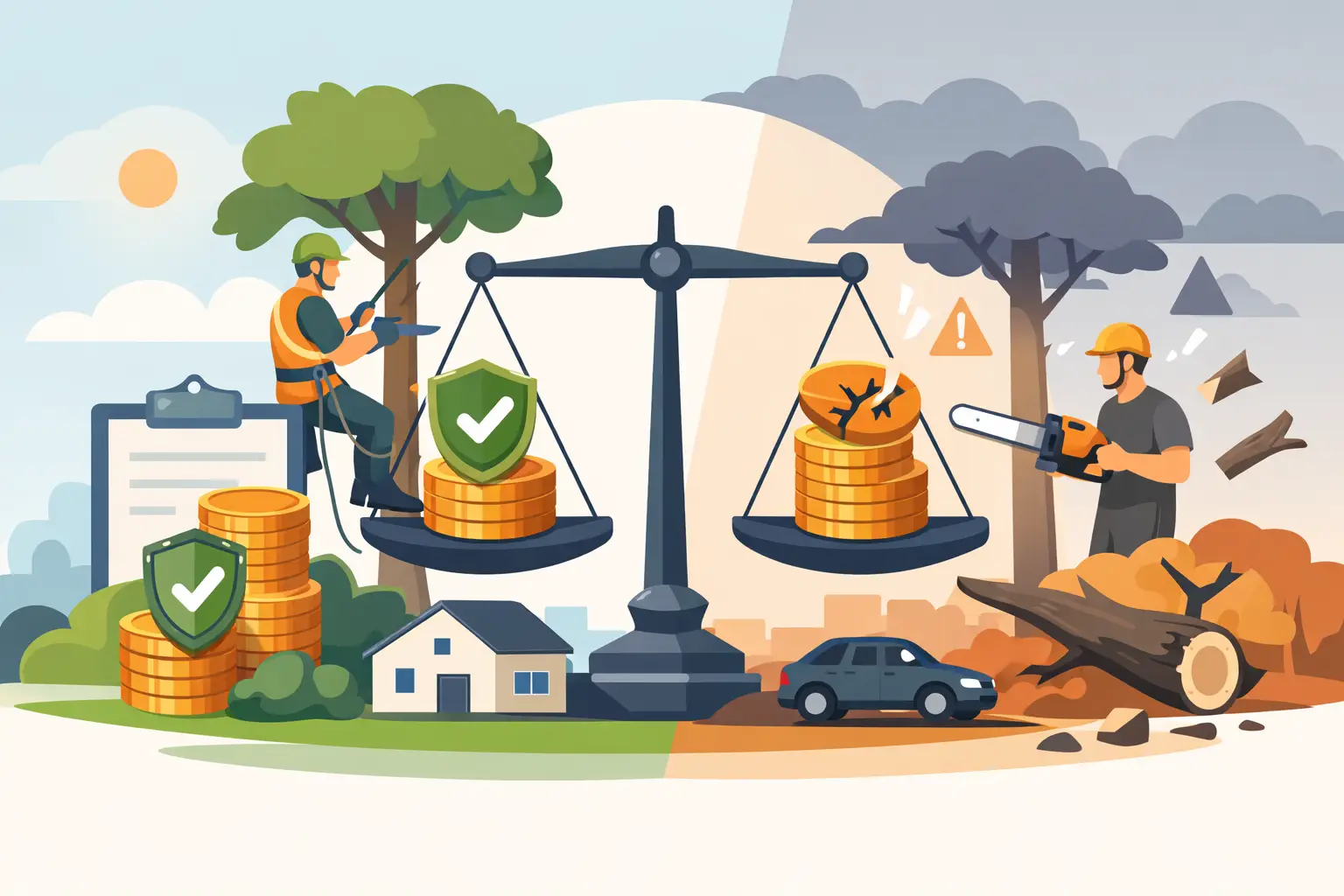
A low tree-service quote can look like a win until a limb lands on a roof, a worker gets hurt, or the cleanup is not included. So, do insured tree companies cost more? Sometimes, but insurance alone is rarely the biggest reason one tree-service estimate is higher than another. The real difference usually comes down to the scope of work, equipment, crew experience, safety planning, and whether the company is prepared to stand behind the job.
For homeowners and property owners in Southern California, choosing an insured company is less about paying extra for a label and more about protecting your property during work that carries real risk. Tree trimming, removals, stump work, and brush clearance often happen around homes, fences, power lines, vehicles, slopes, and neighboring properties. A qualified, insured crew helps make sure the job is handled responsibly from start to finish.
Do Insured Tree Companies Cost More?
An insured tree company may have higher operating costs than someone working without proper coverage. General liability insurance, workers' compensation coverage when required, licensed equipment, trained labor, and safe work practices all cost money. Those expenses can be reflected in the estimate.
But that does not mean every insured company is expensive or that every lower quote is unsafe. A local company with efficient crews, the right equipment, and experience with similar properties can offer fair, competitive pricing while still carrying insurance. The key is to compare what each estimate actually includes instead of comparing the final number alone.
For example, one quote may include trimming, hauling away all debris, protecting nearby landscaping, and a complete site cleanup. Another may cover only cutting branches and leaving the pile behind. The lower quote is not necessarily a better deal if you need to arrange hauling, cleanup, or additional work later.
What Insurance Actually Protects
Insurance is one part of a professional tree-service operation. It can help protect against certain accidental property damage or injuries connected to the work, depending on the policy and circumstances. It also shows that the company takes its responsibilities seriously instead of placing every risk on the homeowner.
Tree work is physically demanding and unpredictable. A branch can shift while being lowered, hidden decay can change how a tree responds to a cut, and access can be difficult on hillside or tightly spaced properties. Even careful crews plan for the unexpected.
Before hiring, ask whether the company carries general liability insurance and request current proof of coverage if you have concerns. If a crew will be working on your property, it is also reasonable to ask about workers' compensation coverage. A professional contractor should be comfortable answering direct questions about credentials and safety practices.
Insurance does not guarantee that nothing will go wrong. What it does provide is a layer of accountability that an uninsured operator may not offer. That peace of mind can be especially valuable when work is close to your home, pool, driveway, solar panels, or a neighbor's fence.
Why Tree-Service Quotes Can Vary So Much
Two insured companies can provide very different estimates for the same tree. That is because tree work is not priced by insurance alone. A responsible quote considers the actual conditions on your property.
Tree size is a major factor. A small ornamental tree that can be trimmed from the ground requires far less labor and equipment than a mature pine, eucalyptus, or palm near a structure. Height, trunk diameter, branch spread, decay, and the amount of material to remove all affect the time involved.
Access matters just as much. A tree in an open front yard is usually easier to service than one behind a narrow gate, above a retaining wall, or on a steep slope. If equipment cannot reach the work area, the crew may need to climb, rig branches down in smaller sections, or make extra trips to remove debris.
The purpose of the work also changes the price. Routine pruning to improve clearance and appearance is different from emergency removal of a damaged tree. Brush clearance for fire prevention may involve dense growth, uneven terrain, hauling, and careful attention to the areas that need to be cleared. In many Southern California neighborhoods, defensible-space work is a practical safety need, not just a cosmetic project.
Finally, cleanup should be clear in the estimate. Ask whether hauling, chipping, green-waste disposal, and final raking are included. A clean property should not be treated as an unexpected add-on after the cutting is complete.
Comparing Insured Tree Companies the Right Way
When reviewing estimates, give each company the same description of the work you want done. If possible, have them inspect the property in person. A visual assessment helps avoid vague pricing and lets the contractor identify access issues, hazards, or work that may require a different approach.
You do not need to become a tree-care expert to compare quotes well. Focus on clear answers to a few practical questions:
What specific trees, branches, or brush areas are included?
Will all cut material be hauled away and the area cleaned?
Is the company insured, and can it provide proof if requested?
Are there access, permit, utility, or neighbor-related concerns to address before work begins?
A detailed estimate is often more useful than a quick number given over the phone. It gives both sides a clear understanding of the job and reduces the chance of surprises. If one price is much lower than the others, ask why. The difference may be reasonable, but it is worth understanding whether the quote excludes cleanup, equipment, insurance, or part of the requested work.
When Paying More Is Worth It
There are situations where choosing the lowest price can create more risk than savings. This is especially true for large removals, trees over roofs, dead limbs near walkways, work close to electrical lines, and heavy brush on slopes. These jobs require careful planning, proper tools, and a crew that knows how to protect the surrounding property.
Paying a little more can be worthwhile when the estimate includes safer methods, full cleanup, reliable scheduling, and a company that communicates clearly. It can also save money in the long run by addressing a hazardous limb before it causes damage or by clearing dry vegetation before fire season increases the risk around a property.
That said, higher pricing should always come with a clear reason. A professional company should be able to explain the work in plain language, point out the factors affecting the estimate, and discuss options when budget is a concern. Sometimes a project can be phased, such as handling immediate hazards first and scheduling lower-priority pruning later.
Fair Pricing Starts With a Clear Scope
The best tree-service estimate is not automatically the cheapest or the highest. It is the one that clearly explains what will be done, reflects the real conditions of the property, and comes from a contractor you can trust on-site.
At Erik's Tree Service & Brush Clearance, Corp., the goal is to give local property owners straightforward recommendations, safe professional service, and a free estimate that fits the work actually needed. Whether you need a hazardous tree evaluated, overgrowth cleared, or routine trimming completed, an insured company should help you understand your options without pressure.
When comparing tree companies, look beyond the price at the bottom of the page. A fair quote should leave you confident that your trees, property, and cleanup are being handled with care.


Comments