


Brush Clearance Requirements Explained

A lot of property owners do not think about brush until they get a notice, spot dry growth creeping up a slope, or realize fire season is getting close. That is usually when brush clearance requirements move from a vague idea to a real concern. In Southern California, staying ahead of overgrown vegetation is not just about appearance. It is about safety, access, and protecting your home, rental, or vacant land from avoidable risk.
What brush clearance requirements usually mean
In simple terms, brush clearance requirements are rules for reducing combustible vegetation around structures and along parts of a property where overgrowth creates a fire hazard. The exact standards can vary by city, county, HOA, lot type, and topography, but the goal stays the same: create defensible space and limit how easily fire can travel.
For most homeowners, this means more than cutting weeds once and calling it done. Dead brush, dry grass, fallen branches, dense ground cover, and overgrown trees can all become part of the problem. If a property has hillsides, fences lined with heavy growth, outbuildings, or neglected perimeter areas, those spots often need the most attention.
This is also where people get tripped up. They assume clearance means stripping the land bare. In most cases, it does not. The work is about reducing fuel, spacing vegetation properly, removing dead material, and keeping growth maintained over time.
Why these requirements matter in Southern California
Southern California properties deal with a mix of dry conditions, wind exposure, and fast-moving fire risk. A yard that looks manageable in spring can become a hazard by late summer. That is why brush clearance is not just a seasonal chore. It is part of responsible property upkeep.
If you own a home, it helps protect your family, structure, and access routes. If you own rental property or vacant land, it helps lower liability and keeps the property from becoming the kind of place neighbors and local agencies start noticing for the wrong reasons. Even if you are not in a high-profile wildfire zone, unmanaged vegetation can still create enough risk to trigger concern.
There is also a practical side to this. Overgrown brush can hide pests, interfere with fencing, crowd tree trunks, and make routine maintenance harder. Once growth gets too dense, the cleanup becomes more labor-intensive and more expensive than regular upkeep would have been.
The areas property owners should pay attention to
The most common focus is the space around the home or any structure. That includes attached and detached garages, sheds, guest houses, and sometimes outdoor equipment areas. Dry weeds under decks, brush against fencing, and low-hanging limbs near roofs are all details that matter.
Perimeter lines are another frequent trouble spot. Brush builds up along back fences, side yards, ravines, and slopes where it is easy to postpone work. These areas may not affect day-to-day use of the property, but they often create the biggest hazard if left alone.
Tree condition matters too. A healthy tree can be an asset, but dead limbs, excess low canopy, and unmaintained growth around the base can add fuel and reduce clearance where it is needed. Good brush work and good tree service often go hand in hand.
What usually gets removed or cut back
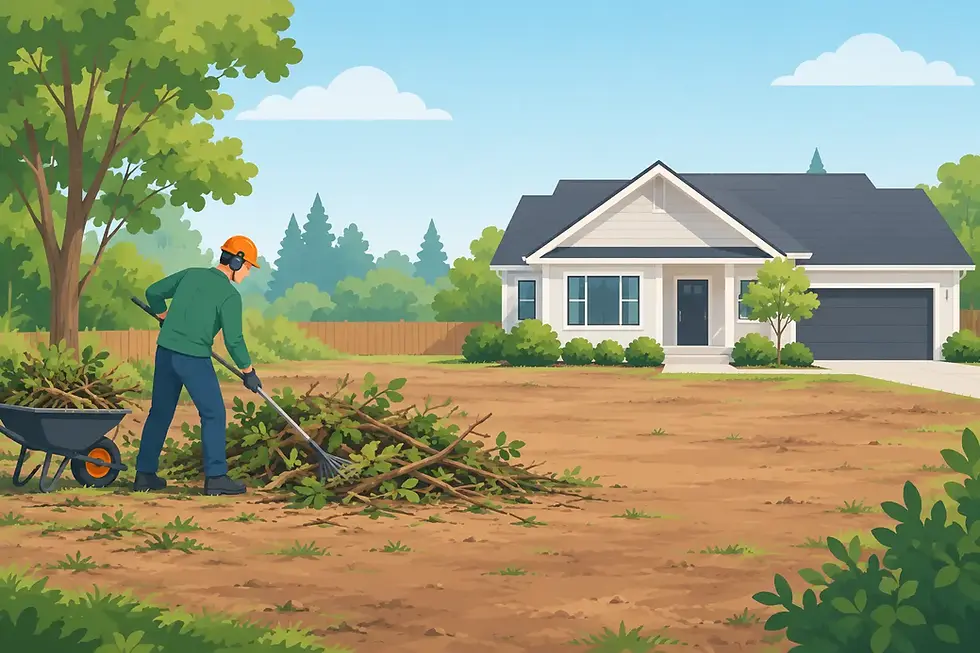
Most brush clearance work centers on reducing dead, dry, and excessive growth. That often includes annual weeds, dry grasses, dead shrubs, fallen limbs, palm debris, and volunteer growth that has spread unchecked. In many cases, crews also thin heavy brush and trim trees to improve spacing and reduce ladder fuels, which are the lower fuels that can carry fire upward.
Not every plant has to go. Some vegetation can remain if it is healthy, spaced properly, and maintained. That is one reason professional assessment helps. A property owner may see green growth and assume it is safe, while an experienced crew sees density, dead material underneath, and poor separation from structures.
The right approach depends on what is growing, where it is located, and how the property is laid out. A flat suburban lot will not be handled the same way as a hillside parcel with mature trees and unmanaged brush at the edges.
Brush clearance requirements are not always one-size-fits-all
This is where a lot of confusion starts. People hear a general rule and expect it to apply exactly the same way everywhere. In reality, brush clearance requirements can depend on local enforcement standards, the kind of structure on site, and whether the land is improved or undeveloped.
A homeowner in a neighborhood with small lots may mainly need to focus on perimeter cleanup, roof-adjacent vegetation, and basic defensible space. A property owner with acreage may need more extensive cutting, thinning, hauling, and ongoing maintenance. If the lot includes a slope, canyon edge, or hard-to-reach sections, the job usually takes more planning and labor.
There can also be trade-offs. Clearing too lightly may leave enough fuel to keep the risk high. Clearing too aggressively can damage desirable landscaping, expose soil, or leave a property looking rougher than necessary. The goal is to clear responsibly, not carelessly.
Common mistakes property owners make
One common mistake is waiting for a warning or citation before acting. By that point, the brush is usually heavier, the work takes longer, and the property may need more than basic trimming.
Another mistake is only clearing what is easy to see from the driveway. Fire risk does not stay in the front yard. Side yards, behind sheds, around retaining walls, and along rear property lines often hold the driest and densest buildup.
Some owners also rely on a quick mow or cutback without hauling debris away. That can leave dead material on site, which defeats much of the purpose. Clearance is not just cutting. It is removing the fuel load.
Then there is the do-it-yourself issue. For a very small and simple yard, basic cleanup may be manageable. But larger lots, steep terrain, chain saw work, tree trimming, and heavy hauling are different. Safety matters. Insurance matters. Experience matters too, especially when a mistake can damage trees, fences, irrigation, or the property itself.
When it makes sense to bring in a professional
If your property has mature trees, hillside brush, neglected perimeter growth, or a lot of dry material to remove, it is smart to get a professional estimate. The same goes for landlords, out-of-area owners, and anyone trying to get a property ready for sale, inspection, or seasonal maintenance.
An experienced brush clearance crew can look at the property as a whole, not just one patch at a time. They can identify where growth is creating the most risk, what should be cut back, what should be removed entirely, and how tree work may factor into the job. They can also handle hauling and cleanup, which is a major part of getting the property truly cleared.
For many customers, the biggest benefit is peace of mind. You want to know the work was done safely, thoroughly, and by an insured company that understands local conditions. That is especially true when the property is in Santa Clarita, the Antelope Valley, Simi Valley, the San Fernando Valley, or other parts of Los Angeles County where dry conditions and brush buildup are a regular concern.
How to stay ahead of brush clearance requirements
The easiest properties to maintain are the ones that never get too far behind. Regular service is usually more affordable and less disruptive than waiting until the growth is out of control. Even one or two check-ins during the year can make a big difference, especially before peak fire season.
It also helps to think beyond weeds alone. Trees, shrubs, slope growth, fence lines, and accumulated green waste all play a role. A clean-looking yard can still have problem areas if the edges and hidden sections are ignored.
If you are not sure where your property stands, a straightforward on-site estimate can answer that quickly. A dependable local company like Erik's Tree Service & Brush Clearance, Corp. can walk the property, explain what needs attention in plain language, and work with your budget to get the job done right.
Brush clearance is one of those jobs that is easy to postpone until it becomes urgent. Taking care of it early keeps your property safer, easier to manage, and better prepared for the dry months ahead.


Comments